In this article, we look into the detailed criteria outlined in the IS V1.2 Dis-4 Air Quality credit and how SiteHive can help you meet them.
Poor air quality affects us all. Whether it’s from traffic, fires, heavy industry or construction work, it can have a negative effect on people and the environment. And it’s not just inconvenience – there’s significant potential harm.
Managing air quality is an important part of any major construction project, and the Infrastructure Sustainability Council developed its V1.2 Dis-4 Air Quality rating to reward the management of air quality impacts. It focuses on minimising adverse impacts to local air quality during construction and operation.
To earn the Dis-4 Air Quality credit, construction projects must:
- Identify and implement measures to minimise adverse local air quality impacts.
- Monitor emissions and/or air quality appropriately during construction.
- Monitor emissions and/or air quality in response to any complaints.
The credit consists of three levels, and each requires appropriate evidence to be provided. Level 1 requires the three core elements outlined above; Level 2 stipulates that there are no recurring or major exceedances of air emission or air quality goals; and for Level 3, projects must show that there are no exceedances at all.
SiteHive’s real-time dust monitoring devices and software include many features that can help meet the criteria for each level of the Dis-4 Air Quality credit. From capturing continuous, real-time data on air quality, to advanced mapping and reporting, SiteHive tools can make it much easier.
Level 1: Laying the foundation
Measures to minimise adverse impacts to local air quality during construction have been identified and monitored.
Projects must identify the likely impacts on air quality, which is generally done through an environmental impact assessment or similar process. Baseline studies plus air quality predictions or modelling are undertaken to identify likely impacts, and these must be documented – for example in the Environmental Management Plan or a specific Air Quality Management Plan.
SiteHive Hexanode devices are ideal for establishing baseline data and identifying any potential issues or locations. They can be deployed quickly and easily: they require no expertise to set up and once placed on site they are fully automated, delivering real-time air quality data immediately. The devices can be moved easily at any time to address specific locations, and all data is recorded based on the monitoring point, so the same device can be easily used in multiple locations over short time periods.
Monitoring of air emissions and/or air quality is undertaken at appropriate intervals and in response to complaints during construction.
Monitoring is key to ensuring the established goals are being met, and to identify any discrepancies or exceedances. Real-time monitoring has a distinct advantage here, as it allows any issues to be identified immediately so that mitigation measures can be implemented. Record-keeping is vital, as the project must demonstrate evidence to show it is meeting the Dis-4 requirements.
SiteHive real-time monitoring devices and software can help with:
- Monitoring air quality at sensitive receptors or discharge points: SiteHive Hexanode real-time monitoring devices monitor particulate matter (PM2.5, PM10) on a continuous, 24/7 basis. The devices are small and automated, so they can be placed in virtually any location and immediately start monitoring data.
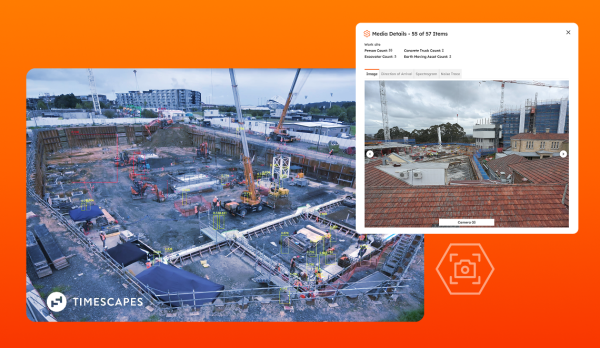
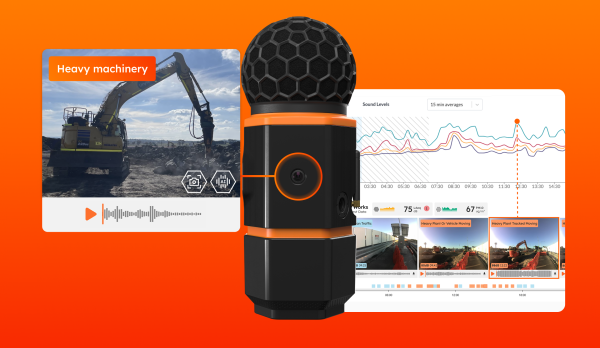
- Identify pollution sources easily: As well as continuous data on air quality, SiteHive Hexanode devices provide images and audio files of any air quality events so that exceedances can be identified quickly. SiteHive Enviro software also provides an interactive map with direction-of-arrival mapping to show the source of dust clearly.
- Monitor high risk activities and complaints: The devices are highly mobile and can be located easily in most situations, including high risk activities such as tunnelling. They can be moved quickly and easily to monitor specific locations or issues as they arise, such as community complaints.
- Mitigate issues quickly: SiteHive Enviro automatically alerts you by SMS or email whenever there is an air quality issue. Alerts are based on the thresholds and rules that you set, so you can be alerted before an issue becomes an exceedance and take action to mitigate it before it affects your air quality goals.
- Respond to complaints: Evidence of community liaison and related monitoring can be recorded in SiteHive Enviro, along with images of site events and other environmental data. You can use SiteHive Enviro’s Events and Daily Notes features to track exceedances and document mitigation actions taken. This ensures you have the information you need to respond to any complaints and show compliance with IS requirements.
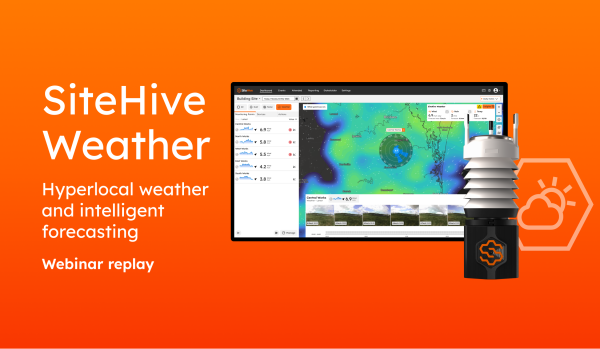
- Forecast and manage weather impacts: Weather aspects such as wind and rain can obviously have an impact on air quality and how it proceeds. SiteHive Enviro provides automated weather forecasts and information from local BoM or site-based weather stations alongside your monitored data. With this you can:
- Forecast and mitigate any likely weather impacts. For example, you can see the likely impact of wind and dry conditions, and water areas to dampen dust.
- Identify the impact of weather on specific situations; and
- Have a complete record of the ambient weather alongside your monitoring data.
- Compare local dust conditions with EPA data: SiteHive Enviro automatically provides reference data from the nearest EPA monitoring station alongside monitored data in real time. You are able to compare the ambient reference measurements directly with onsite measurements.
Providing evidence
To achieve the IS ratings, projects must provide evidence that they meet the required standards. SiteHive Enviro makes this much easier as it provides a comprehensive system of record that can be interrogated, reported on, and even shared with external parties.
With SiteHive Enviro you can:
- Generate summary and detailed reports: You can create a range of reports to meet your needs. For example, one page summary PDF reports of key air quality metrics can be produced with one click, and can be shared easily as required. The reports can include weather data alongside your monitored data. Using SiteHive Enviro Pro you can also customise your reports to provide the timing, data and metrics you want to show in order to demonstrate compliance with air quality goals. Reports can be used to show ongoing monitoring as well as any specific monitoring conducted in response to complaints.
- Keep a complete record: SiteHive Enviro provides a complete system of record so you always have comprehensive information, which includes photos and audio files in addition to continuous data. This provides evidence to demonstrate compliance and mitigation measures. You are able to add in ad hoc or additional information through the Daily Notes feature, for example so that you can record mitigation measures taken, or explain specific situations, or add any other relevant information.
- Share information with stakeholders and communities: the Stakeholder View in SiteHive Enviro Pro allows you to share information by providing a curated view of activities to stakeholders, external teams, clients, communities, contractors, the public, or anyone you choose. It can be used to provide information in response to complaints, and is an excellent and easy way to be transparent and build community trust. You can provide customised and summary views of monitoring data to address specific concerns.
Level 2: Monitoring and modelling demonstrates no recurring or major exceedances of air emission or air quality goals
The key here is real-time monitoring. SiteHive Hexanode devices provide data 24/7, so you have a continuous record of the situation, including after any mitigation measures. Graphs and reporting show air quality levels pre and post mitigation, and can be summarised for any period or date. You can also deploy SiteHive Hexanode devices strategically at key locations and close to sensitive receptors, to get very location-specific data.
As detailed above, the combination of real-time data, weather information and alerts allows you to forecast likely conditions and be alerted before issues occur. You have the information needed to identify issues, make informed decisions and take proactive action to prevent or mitigate air quality impacts occurring.
If air quality changes from design or modelling need to be updated, using SiteHive devices and software makes it easier as they provide real-time feedback on operational conditions. You can place SiteHive Hexanodes across operational zones to compare real-time data with previous models, providing immediate feedback on your air quality performance.
Level 3: Monitoring and modelling demonstrates no exceedances of air emission or air quality goals
To achieve Level 3 in air quality, projects must show a perfect record in terms of managing to the goals. Real-time data, immediate analysis, and proactive management are vital to achieving this level.
To ensure no exceedances, teams must have access to immediate and high quality information. It requires a proactive approach that identifies and mitigates issues before they occur. As well as providing real-time data as a given, some of the ways that SiteHive devices and software assist with this include:
- Highly mobile devices: SiteHive Hexanodes can be moved quickly and easily, so they can be set up where they are required and moved as needed.
- Customisable thresholds and real-time alerts: Set your rules and thresholds so that SiteHive Enviro automatically alerts you before exceedance levels are reached. You have time to address the issue before it becomes a problem.
- Use mapping, images and audio to make fast, accurate decisions: SiteHive Enviro provides valuable contextual information so you have everything you need to make the right decision, quickly. Maps show direction of arrival so you can see where the issue is coming from; pictures and audio help you identify the cause quickly.
- Adjust mitigation strategies: Real-time data allows you to adapt your strategies as you go with current data, helping to make better decisions and mitigating risk and exceedances.
- Factor in weather: SiteHive Enviro provides weather forecasts and real-time weather conditions alongside monitored data You are able to project and mitigate likely weather impacts and see when weather has affected conditions.
- Real-time engagement: By providing real-time data, SiteHive products allow you to manage air quality issues proactively and act on concerns early, actively preventing complaints and delays. For more details see this blog article on using real-time monitoring to proactively manage site impacts.
Whichever level you’re aiming for, SiteHive can make it easier
The IS v1.2 Dis-4 Air Quality rating is designed to help ensure infrastructure projects in Australia and New Zealand minimise the impact on local air quality, making it better for local communities and the environment. It rewards projects that minimise emissions and manage to their air quality goals.
Achieving the Dis-4 credit can be made simpler by using SiteHive’s powerful monitoring devices and software, which provide real-time monitoring, rich contextual info, and immediate analysis and reporting. They enable proactive management of air quality, which is vital for meeting the higher level IS requirements too.
Whichever IS level you’re aiming for, SiteHive can save you time and money while ensuring a cleaner, healthier environment for all.
If you’re tackling the IS Dis-4 Air Quality credit and want to see how SiteHive can help, get in touch today!
Looking to achieve other credits from the IS Rating Scheme?
Read more from our series on achieving IS credits more easily with SiteHive:
Useful links:
- More details on SiteHive dust monitoring solutions..
- Contact us if you’d like more information or a demo.
What you’ll find out:
- Overview of the Dis-4 Air Quality credit and criteria
- Effective tactics for each level
- How SiteHive can help you
Ready to simplify air quality control?
Learn more about how SiteHive can make monitoring and managing air pollution easy for your construction site.