In this article, we look into the detailed criteria outlined in the IS V2.1 As-Built Env-4 Air Quality credit and how SiteHive can help you meet them.
We all see the impact of poor air quality. Whether it’s from fires, pollution or construction work, it can have a negative effect on people and the environment. And it’s not just inconvenience – there’s significant potential harm.
So managing air quality is important, and it’s a core part of the IS Rating Scheme. The IS v2.1 As Built Env-4 Air Quality credit focuses on reducing the impacts of dust and air pollution during construction and operational phases, ensuring the surrounding environment remains protected. It aims to improve air quality for work teams, communities and the environment by guiding the identification of pollutant sources, measuring their effects, and applying mitigation strategies.
The overall intent of this credit is to manage air quality impacts and improve air quality for receptors, and to earn the Env-4 Air Quality credit construction sites must:
- Implement and monitor air quality mitigation measures.
- Regularly engage with stakeholders and incorporate their feedback.
- Ensure no recurring or major exceedances of air quality goals.
- Implement real-time air quality monitoring and public reporting.
The credit consists of three levels, starting with basic compliance (Level 1), through to more advanced activities (Level 2), and on to industry-leading practices at Level 3.
Here we detail how SiteHive’s real-time dust monitoring devices and software can help you meet the criteria for each level of the Env-4 Air Quality credit. From capturing continuous, real-time data on air quality, to advanced mapping and reporting, SiteHive tools can make it much easier.
Level 1: Laying the foundation
Managing air quality starts with identifying potential pollution sources and implementing the mitigation measures outlined during the design phase.
ABL1.1: Construction measures to mitigate air quality impacts and meet the air quality goals established in Design have been implemented and monitored.
Monitoring is key to ensuring effectiveness, while record-keeping and evidence are vital as the project must demonstrate monitoring is occurring in line with the plan – or justify any divergences. SiteHive real-time monitoring devices and software can help with:
- Monitoring air quality at sensitive receptors: SiteHive Hexanode real-time monitoring devices monitor particulate matter (PM2.5, PM10) on a continuous, 24/7 basis. As they are highly mobile, they can be moved quickly to monitor specific locations and sensitive receptors.
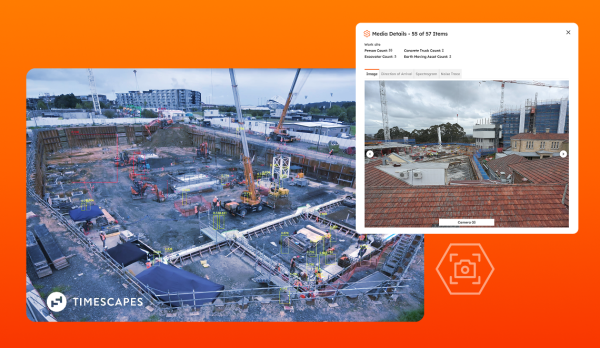
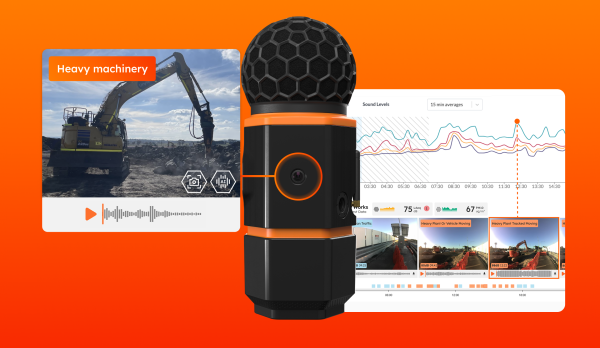
- Identify pollution sources: SiteHive Enviro software provides immediate direction-of-arrival mapping so you can identify the source of any dust or pollution. Images and audio files associated with any air quality events are also provided within the software, making it even easier to identify the sources of exceedances.
- Fast mitigation: SiteHive Enviro automatically alerts you whenever there is an air quality exceedance, based on the thresholds and rules that you set. Alerts are provided by SMS and email, so you are aware as soon as there is an issue and are able to take steps to mitigate it immediately.
- Complete record-keeping: SiteHive Enviro provides a complete system of record so you always have comprehensive information, which includes photos and audio files in addition to continuous data, as evidence to demonstrate compliance and mitigation measures. You are also able to add in information, through the Daily Notes feature, so that you can also record mitigation measures taken, or any other relevant information.
- Generate detailed reports: Create comprehensive reports using SiteHive’s reporting tools. These reports include key metrics on air quality, which help demonstrate your compliance with air quality goals.
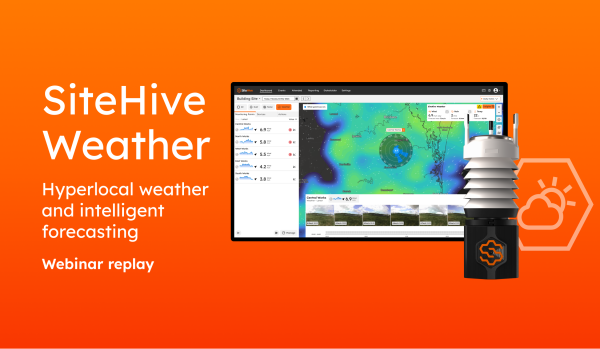
- Weather impacts: SiteHive Enviro provides weather information from local or site-based weather stations so you can:
- Forecast and mitigate any likely weather impacts;
- Identify the impact of weather on any specific situations; and
- Have a complete record of the ambient weather alongside your monitoring data.
SiteHive Enviro Pro can also show live data from EPA air quality monitoring stations. So specific site conditions can be compared with EPA reference data to determine if issues are being caused on site.
ABL1.2: Measures to mitigate operational air quality impacts and meet the operations air quality goals established in Design have been implemented.
Any mitigation measures must be implemented, along with evidence such as photos, drawings or asset registers. By conducting real-time monitoring, projects can ensure they have the appropriate data and information to meet this criteria.
As outlined above, SiteHive Enviro provides a complete system of record of air quality levels on a continuous basis, backed by images and audio. Additional materials can also be entered into the system to expand and report on the data, and this all sits alongside local weather information. It provides a complete picture of air quality that can be used for mitigation and reporting purposes.
ABL1.3: Details regarding mitigation measures and monitoring that require ongoing attention during operation have been formally handed over to the proponent/operator.
One of the beauties of SiteHive Enviro is that all your information is always on tap. SiteHive helps ensure a smooth transition for any operational handovers by providing extensive records, enabling collaboration and sharing information:
- Project lifecycle monitoring: SiteHive provides continuous monitoring from baseline data collection through construction and into operations. You can hand over complete data records, ensuring the operator has all the necessary information.
- Streamlined collaboration: SiteHive Enviro’s Daily Notes feature allows teams across project phases to collaborate seamlessly, keeping track of mitigation measures and monitoring.
- Share information: The Stakeholder View in SiteHive Enviro Pro allows people to share information by providing a curated view of activities to stakeholders, external teams, clients, communities, contractors, the public or anyone you choose.
That covers the basics of Level 1 for the As-Built Env-4 Air Quality Credit. But the journey doesn’t stop here. Happily, level 2 isn’t much more work, as you can build upon the foundations you’ve set up in Level 1.
Level 2: Going above and beyond
ABL2.1: Air quality impacts and mitigation measures have been regularly reviewed with key external stakeholders and their feedback considered.
Stakeholder engagement is important in building trust and maintaining good relationships with communities and other stakeholders. To achieve Level 2 credit, communities and other stakeholders must be engaged every two years to review progress. SiteHive Enviro makes this process straightforward with:
- Real-time data sharing: SiteHive Enviro’s Stakeholder View enables real-time access to air quality data, allowing you to keep stakeholders (such as regulators, community members, and environmental groups) informed. You can provide customised and summary views of monitoring data to address specific concerns.
- Record-keeping: Evidence of community liaison can be recorded in SiteHive Enviro, along with images of site events and other environmental data. You can use SiteHive Enviro’s Events and Daily Notes features to track exceedances and document mitigation actions taken. This ensures that you have all the evidence needed to demonstrate compliance.
- Real-time engagement: By providing real-time data, SiteHive products allow you to manage air quality issues proactively and act on concerns early, actively preventing complaints and delays. For more details see this blog article on using real-time monitoring to proactively manage site impacts.
ABL2.2: Implemented construction measures have been monitored and no recurring or major exceedances of the air quality goals demonstrated.
The key here is real-time monitoring. SiteHive Hexanode devices provide data 24/7, so you have a continuous record of the situation after any mitigation measures. Graphs and reporting show air quality levels pre and post mitigation, and can be summarised for any period or date.
You can also deploy SiteHive Hexanode devices strategically at key locations and close to sensitive receptors, to get very location-specific data.
If an interpretation report is required by a qualified professional, this can be prepared quickly and easily as all the data is on hand through SiteHive Enviro and can be accessed from anywhere.
ABL2.3: Modelling of air quality during asset operation has been updated if required and demonstrates no recurring or major exceedances of the air quality goals.
If operational air quality changes from Design and the modelling needs to be updated, using SiteHive devices and software makes it easier as they provide real-time feedback on operational conditions. You can place SiteHive Hexanodes across operational zones to compare real-time data with previous models, providing immediate feedback on your air quality performance.
With Level 2 in the bag, Level 3 is within reach. Now, let’s dive into Level 3 to understand its three criteria and how SiteHive can help you meet them.
Level 3: Industry-leading practices
To achieve Level 3 in air quality, projects must implement real-time monitoring and show a perfect record in terms of managing to the goals. Real-time data, immediate analysis, and proactive management are vital to achieving Level 3.
ABL3.1: Implemented construction measures have been implemented and no exceedances of the air quality goals demonstrated.
To ensure no exceedances, teams must have access to immediate and high quality information. It requires a proactive approach that identifies and mitigates issues before they occur. As well as providing real-time data as a given, some of the ways that SiteHive devices and software assist with this include:
- Highly mobile devices: SiteHive Hexanodes can be moved quickly and easily, so they can be set up where they are required and moved as needed.
- Customisable thresholds and real-time alerts: Set your rules and thresholds so that SiteHive Enviro automatically alerts you before exceedance levels are reached. You have time to address the issue before it becomes a problem.
- Use mapping, images and audio to make fast, accurate decisions: SiteHive Enviro provides valuable contextual information so you have everything you need to make the right decision, quickly. Maps show direction of arrival so you can see where the issue is coming from; pictures and audio help you identify the cause quickly.
- Adjust mitigation strategies: Real-time data allows you to adapt your strategies as you go with current data, helping to make better decisions and mitigating risk and exceedances.
ABL3.2: Modelling of air quality during asset operation has been updated if required and demonstrates no exceedances of the air quality goals.
This category is as per ABL2.3, but with the higher level of compliance that NO exceedances of air quality goals must be seen. You can see the elements where SiteHive products can make a difference here outlined under ABL2.3 and ABL2.2 above.
ABL3.3: Real-time air quality monitoring and public reporting have been demonstrated for construction.
For Level 3, real-time monitoring is mandated for identified sensitive receptors and public reporting is a must. SiteHive Enviro is ideal for meeting these criteria as it provides:
- Real-time data and reporting: SiteHive Hexanodes provide continuous data, and can be deployed easily close to sensitive receptors. Automated reporting in easy-to-understand formats makes it easy to share information.
- Community/stakeholder accessible data: A Stakeholder View in SiteHive Enviro allows you to share real-time air quality data with the people you choose. You can configure the system to offer a curated, live and transparent view on parameters such as pollutant levels.
- Public reporting: The Stakeholder View can be delivered through a simple link or published live to the public directly on your project’s, or any other, website. The Stakeholder View is a powerful communication tool during construction and operational phases – see this blog on how to keep stakeholders informed for more details.
Whichever level you’re aiming for, SiteHive makes it easier.
The IS v2.1 As Built Env-4 Air Quality rating ensures infrastructure in Australia and New Zealand is better for people, the planet, and business – delivering tangible and measurable benefits across a range of social, environmental and economic areas.
Achieving the Env-4 credit can definitely be made much simpler by using SiteHive’s powerful monitoring devices and software, which provide real-time monitoring, rich contextual info, and immediate analysis and reporting. They enable proactive management of air quality, which is vital for meeting the higher level IS requirements too.
Whichever IS level you’re aiming for, SiteHive can save you time and money while ensuring a cleaner, healthier environment for all.
So, if you’re tackling the IS Env-4 Air Quality credit and want to see how SiteHive can help, get in touch today!
Looking to achieve other IS v2.1 credits?
Read more from our series on achieving IS credits more easily with SiteHive:
Useful links:
- More details on SiteHive dust monitoring solutions..
- Contact us if you’d like more information or a demo.
What you’ll find out:
- Explanation of the As Built Env-4 Air Quality credit and criteria
- Effective tactics to obtain each level
- How SiteHive can help you
Ready to simplify air quality control?
Learn more about how SiteHive can make monitoring and managing air pollution easy for your construction site.