In this article, we’ll take a deep dive into the different vibration monitoring technologies, their pros and cons, and what’s the best choice for construction projects.
Measuring vibration in construction: Why it matters
Monitoring vibration is essential in construction and big infrastructure projects. It helps ensure that work on-site doesn’t damage nearby buildings, disrupt local fauna, or cause discomfort to people in the area. Whether a project requires demolishing, piling, drilling, or excavating, vibration management is a critical component of Construction Environmental Management Plans to stay compliant with regulations and avoid costly issues down the line.
But with so many technologies and options out there, how do you pick the right technology for your needs? SiteHive breaks it down for you!
What should you monitor?
There are three aspects you should take into consideration when managing vibration impacts:
1. Structural vibration
Construction activity generates ground vibration that can affect nearby structures. Too much vibration can cause cracks or even structural damage. Australia doesn’t have a specific standard for structural vibration in buildings. However, AS 2187.2 – 1993 suggests a max peak particle velocity of 5 mm/s for blasting impacts. If a structure is particularly sensitive to vibration, it should be assessed individually. In general, if no site-specific study is available, 5 mm/s is a safe guideline. Read this blog article to find out more about Australian standards for monitoring structural vibration.
2. Human comfort
People living or working near construction sites can feel vibrations at much lower levels than what would cause structural damage. Prolonged or excessive vibration can be disruptive and stressful. Australian Standard AS 2670.2 sets guidelines for vibration levels in buildings to keep people comfortable. It defines limits for continuous and intermittent vibration to prevent complaints from residents. Read this blog article to find out more about Australian standards for monitoring human comfort impacts caused by vibration.
3. Vibration-sensitive equipment and facilities
Facilities near construction works may contain precise equipment that is sensitive to vibration. Sensitive facilities range from less sensitive spaces like workshops and office spaces, to hospitals and laboratories which contain precision equipment like optical microscopes. The Vibration Criterion (VC) curves set the guidelines for assessing and managing the impacts of vibration on sensitive equipment.
4. Ground-borne noise
Ground-borne noise can also have an impact on human comfort. Ground-borne noise is noise caused by ground vibration and is typically characterised as low-frequency “rumbling” noise. Potential sources of ground-borne noise include trains, buses on rough roads, and vibration-intensive construction activities, especially tunnelling. These cause vibrations in the ground/building that can be felt by the people in it. Also, audible sound waves may be produced by resonance generated in walls and ceilings.
Does this sound like a complicated puzzle? It doesn’t have to be! Let’s take a look at technologies used to measure vibration and see what’s the best one for your construction needs.
Technologies available for measuring vibration
There are two main technologies used for vibration monitoring:
Geophones
Geophones have been used in vibration monitoring for decades, particularly in seismic monitoring and geotechnical projects. Primarily focusing on low-frequency vibrations, these sensors are mainly used to measure velocity produced by acoustic waves. They are robust, easy to install, budget-friendly and highly effective for ground vibration monitoring.
Accelerometers
Accelerometers measure acceleration as well as velocity and capture a wider frequency range (low and high). Many accelerometer devices are compact and can be installed in any orientation, making them highly accurate for capturing detailed vibration data in multiple scenarios. MEMS accelerometers, in particular, have become a cost-effective and portable alternative to traditional geophones, offering great performance and ease of use.
| Factor | Geophones | Accelerometers |
|---|---|---|
| Technology | Measures velocity (and acceleration to a limited extent) | Measures velocity and acceleration (more reliable for measuring both at the same time) |
| Sensitivity | Moderate sensitivity, low ranges only | High sensitivity for a wide range of vibrations. Performs well even at very high vibration levels. |
| Frequency Range | Limited to low-frequency vibrations | Covers both low and high frequencies across the entire frequency range. |
| Orientation | Needs specific placement | Works in any position |
| Ease of Use | Simple, easy-to-install | Requires proper setup and calibration |
| Cost | Cost-effective for basic needs | Higher upfront cost, except for MEMS sensor technology |
Up your game: Why you should use MEMS accelerometers
For years, geophones were the go-to choice for vibration monitoring because they were known for their effectiveness and affordability. But with the rise of MEMS accelerometers, that’s no longer the case.
MEMS accelerometers are changing the game in construction vibration monitoring. Here’s why…
- They’re perfect for measuring both structural vibration and human comfort: Accelerometers are better for measuring both acceleration and velocity, which gives a more all-in-one picture of the effects of vibration. And because accelerometers can be mounted in any direction, you can attach them directly to a structure to measure vibration impact where it matters most. This gives you more confidence to proactively reduce risks of structural damage.
- They measure both high and low-frequency: Because they capture both high and low frequencies, MEMS accelerometers provide much more precise measurements than geophones, which are limited to low-frequency vibrations.
- They can be installed on any surface and in any direction: Unlike geophones, which must be placed on a flat, horizontal surface.
- They’re cost-effective: MEMS sensors have made accelerometers a cost-effective alternative to traditional geophones, offering better performance without the high price tag.
- They’re compact, easy to install, and easy to move: Making it easier than ever to measure vibration across different scenarios.
That’s why we chose MEMS sensor technology for our SiteHive Hexanode Vibration devices. So you get real-time, high-accuracy data without the hassle. Whether you’re monitoring vibration for urban construction, civil engineering or large infrastructure, our devices help you every step of the way!
Get everything you need (and more!) with SiteHive vibration solutions
Our device and software make it easy to see and manage what’s causing vibration on your site. Get real-time vibration data 24/7 to identify vibration events, report easily, comply with regulations and keep stakeholders informed.
SiteHive Hexanode Vibration: Advanced vibration monitoring devices
- Best-in-class technology: Our vibration monitoring device uses MEMS sensor technology for the most accurate and cost-effective measurements.
- All your vibration data in real-time, 24/7: Our devices continuously capture all vibration data for structural, human comfort vibration, as well as ground-borne noise.
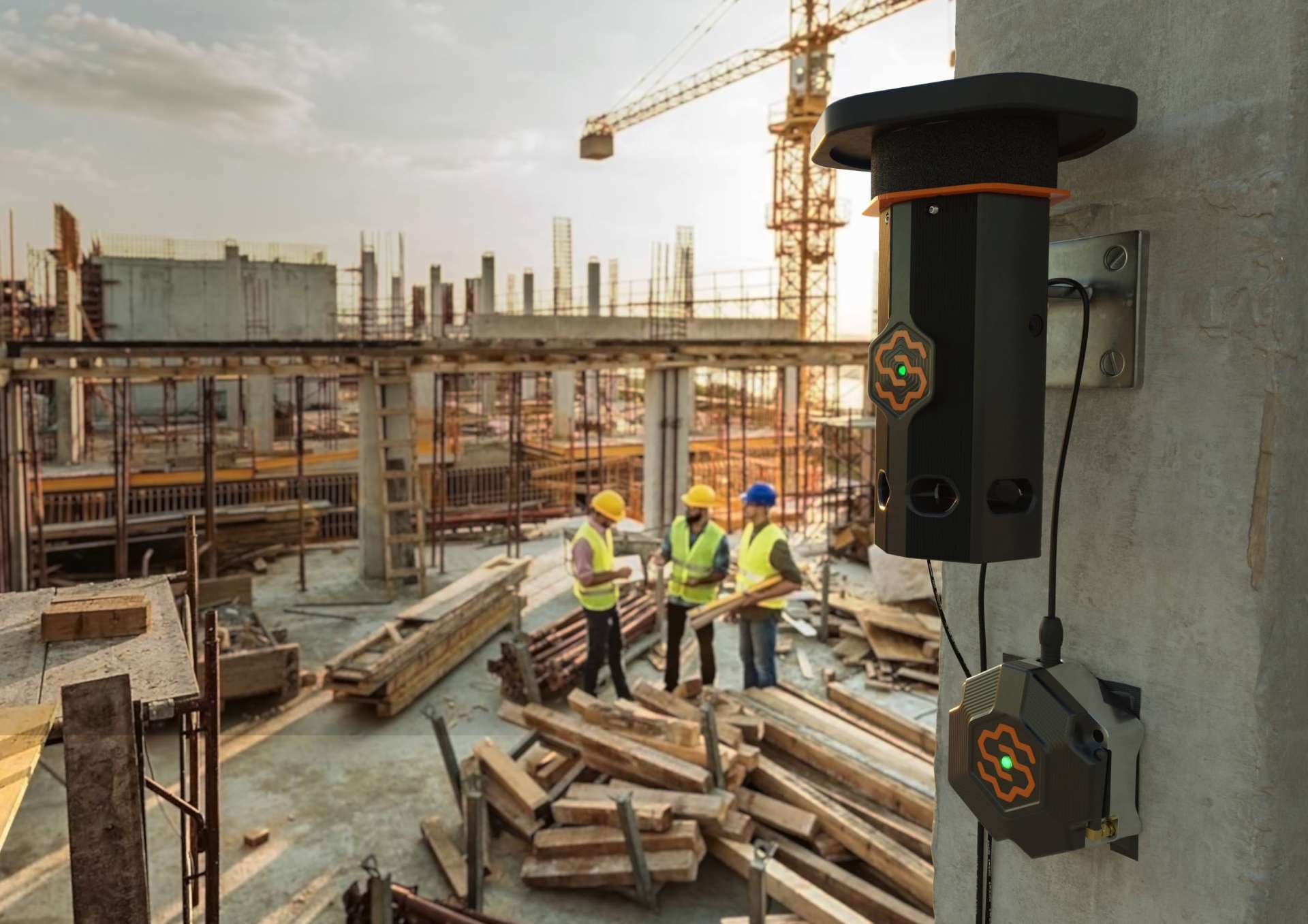
- Small, robust and compact: Uniquely small in size, the Hexanode Vibration is easy to transport, easy to move, easy to deploy. Its robust design allows it to withstand any harsh site conditions.
- Easy to set up on any surface: It can be mounted in any orientation and on any surface so that vibration can be monitored in virtually any situation.
- Affordable pricing and subscription model: Our device is very cost-effective compared to others. It’s provided on a subscription/rental basis with no upfront costs. So you can install as many devices as you need and send them back when you’re done. Without breaking the bank! More info on our pricing model here.
The SiteHive Hexanode family of devices also includes equipment for managing noise and dust.
SiteHive Enviro: Intuitive, time-saving software
When you rent a SiteHive Hexanode device, you get access to SiteHive Enviro (without any additional cost!). Our smart, easy-to-use platform makes data visualisation and reporting effortless:
- Accessible from anywhere, on any device: Because it’s a cloud-based system, SiteHive Enviro can be accessed on any type of device, from wherever you are. You have a live overview of your site that you can access at any time.
- Easy workflows to streamline your monitoring process: Our award-winning software automates key processes so that the time spent collecting, managing, and understanding data is dramatically reduced.
- Intuitive data visualisation to understand vibration trends quickly: SiteHive brings all your information together, making it much easier to manage and act. Summary statistics for peak velocities and vibration dose values are calculated instantly, providing essential data for vibration analyses.
- Interactive graphs for deep insights into site activity: See your data alongside your customised thresholds and out-of-hours. Use our timeline brush to investigate events with ease by selecting a specific time period for a more detailed view of your site’s activity.
- Quick and easy reporting: Generate elegant PDF reports in just a few clicks with site-specific configurations. With our Stakeholder View, you can also create a curated view of your site for stakeholders and teams. Our reporting tools give you everything you need to prove you’re compliant and maintain good relationships with stakeholders.
See all the great things you can do with SiteHive Enviro or take your environmental monitoring to the next level with SiteHive Enviro Pro.
With SiteHive, you get more than just a vibration monitoring device. You get a complete solution that allows you to proactively manage your site’s vibration impact and stay one step ahead at all times. Read about the SiteHive Vibration complete solution or get in touch with us today to learn more!
Useful links:
- More details on SiteHive vibration monitoring solutions..
- Contact us if you’d like more information or a demo.
What you’ll find out:
- Why measuring vibration in construction is important
- What should you monitor
- Technologies available for measuring vibration
- Benefits of using MEMS accelerometers
- How SiteHive can help
Ready to simplify vibration management?
Learn how SiteHive can make vibration monitoring easy for your construction site.