Real-time environmental monitoring has become a critical part of modern construction and heavy operational works. As regulatory requirements tighten and community expectations rise, relying on minimal or periodic monitoring is no longer enough. Minimal monitoring can leave contractors exposed to a range of issues, from construction delays to regulatory issues, and from team safety to community impacts.
By deploying more real-time environmental monitoring devices for noise, dust, and vibration monitoring, project teams can gain access to richer data, clearer insights, and greater control.
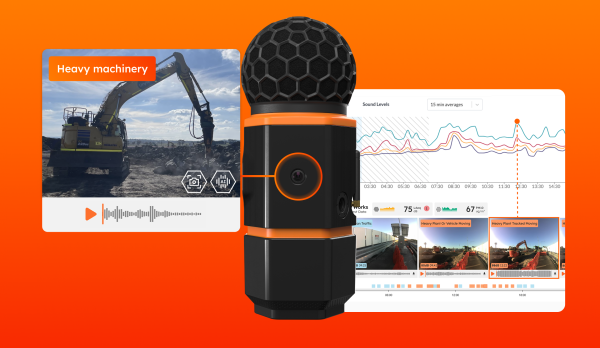
A network of devices across a site delivers not just more data, but more reliable outcomes. Modern devices capture measurements plus rich contextual information, such as images and audio. So more measurements also means more contextual information — which leads to better and faster decisions. The result is not just improved compliance, but confidence in decision-making, higher performance, and better stakeholder relationships.
Real-time environmental monitoring isn’t just about ticking regulatory boxes – it’s about understanding what’s happening on site as it happens, and using that information to shape smarter, safer, and more efficient operations.
Why using more monitoring devices delivers better results
Across Australia and New Zealand, real-time environmental monitoring with multiple devices is increasingly used to support compliance with state, territory and regional requirements. This includes Environmental Management Plans (EMP/CEMP), development consent conditions and resource consents, set by local councils and environmental regulators.
Increasing the number of monitoring devices across a site builds a dense data network that significantly improves data quality, coverage, and confidence in outcomes. It delivers continuous, granular visibility that transforms how teams can manage impacts. The benefits are numerous, including:
1. Enabling proactive compliance instead of reactive responses
With real-time noise, dust, and vibration monitoring, exceedances can be identified as they develop. Multiple devices provide greater coverage, allowing teams to:
- Detect rising trends before limits are breached
- Avoid work stoppages, complaints, or enforcement action
- Respond immediately with mitigation measures.
This proactive approach supports continuous compliance with planning conditions, environmental permits, and consent requirements.
2. More accurate and defensible environmental data
Using more monitoring points improves the accuracy and reliability of environmental data. Instead of relying on a single device to represent an entire site, multiple sensors can capture local conditions across boundaries, at sensitive receptors, and in high-risk zones.
This delivers:
- Continuous, time-stamped records based on hyper-local monitoring points
- Clear evidence of compliance during audits or investigations
- Stronger, defensible reporting for regulators and clients.
3. Better insights through increased data density
More monitoring points mean richer data – which in turn delivers better insights. Analysing noise, dust, and vibration data across multiple locations provides a clear picture of site behaviour, trends and relativity.
With multiple monitoring points teams have comparison points to better understand the local impact. With just one measurement it’s harder to tell if that measurement is actually high or low. When it’s seen in the context of other local measurements, teams can see if it’s an outlier and an issue.
More monitoring provides relativity: teams are able to see immediately where high measurements are across the site, and if they are caused by the site conditions.
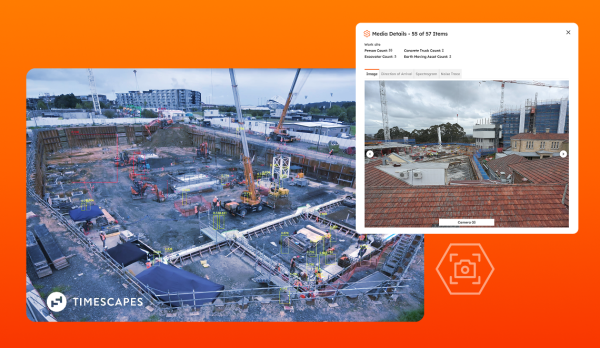
And with advanced monitoring devices this data includes not just noise, dust and vibration levels, but also images, audio files and AI-automated classifications.
With all this information teams can:
- Compare data points to understand the relative impact of each
- Correlate data across environmental factors to identify root causes and sources
- Identify patterns linked to specific activities or equipment
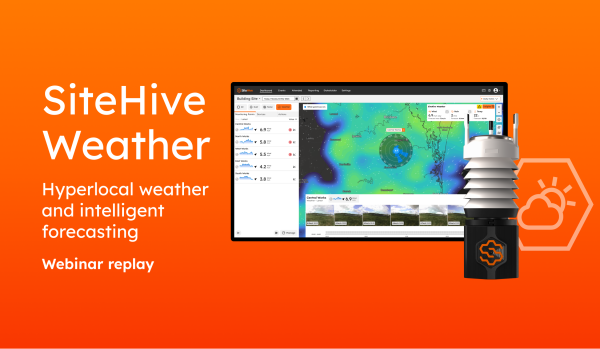
- Understand how weather and site layout affect impacts
- Predict when exceedances are most likely to occur.
This level of insight enables smarter planning and sequencing, and allows mitigation strategies to be more targeted and confined to specific locations.
4. Improved risk management and mitigation
Environmental risks are one of the most common causes of construction delays and reputational damage. Real-time monitoring networks reduce this risk by turning unknowns into measurable, manageable variables.
Modern monitoring devices can provide automated alerts based on user-created rules, allowing issues to be flagged before actual thresholds are exceeded. Having devices in multiple locations means issues can be identified faster, closer to the source of wherever they arise. This enables:
- Faster response times to emerging risks
- Reduced likelihood of complaints or compliance breaches
- Reduced reparation costs.
With better visibility, environmental risks become easier to control and less disruptive to both operations and local communities.
5. Stronger community and stakeholder confidence
Construction sites and heavy industrial works increasingly operate under public scrutiny. Transparent, real-time monitoring helps demonstrate a commitment to environmental responsibility and to minimising the impact on local communities.
Using multiple monitoring devices allows teams to:
- Share accurate and comprehensive data with stakeholders and authorities (see SiteHive’s Stakeholder View as an example of live, continuous reporting)
- Respond quickly to community concerns
- Build trust through measurable performance.
Rather than relying on assurances, teams can provide clear, data-backed evidence of responsible site management.
6. Cost efficiencies through prevention, not reaction
While adding more monitoring devices may seem like adding costs, the reality is that it delivers immediate operational productivity improvements, as well as significant long-term savings.
The costs of poor environmental management can include delays, fines, compensation, more internal time spent, reputational damage and more. These costs can easily dwarf the investment in monitoring.
Real-time monitoring with appropriate coverage reduces:
- The costs associated with breaches and remediation, including fines and reparations
- Delays caused by shutdowns
- Time spent on manual data collection, analysis, investigation and reporting
- Any reputational or other damage caused by exceedances, community or environmental impact and late delivery.
For example, a network of devices gives projects the confidence to do more work than initial modelling suggests, as they know the exact environmental impact in real time at each monitoring point. People are able to work until they are close to compliance levels because they get immediate, hyper-local information. This results in being able to work more productively, manage scheduling more effectively and stay on track with timelines and plans.
A network of monitoring devices allows teams to focus on action rather than administration, improving overall project efficiency.
7. A holistic view of environmental performance
Noise, dust, and vibration are often interconnected. Monitoring them in isolation can miss important relationships. A network of real-time environmental monitoring devices provides:
- A true understanding of conditions and impacts across the entire site
- Integrated oversight of multiple environmental parameters
- Clear understanding of cause and effect
- How weather patterns influence dust movement
- How vibration correlates with specific activities
- Better-informed mitigation and planning decisions.
This holistic view supports long-term environmental performance improvement across projects.
From compliance to confidence
Using more real-time environmental monitoring devices isn’t about collecting more data for its own sake. It’s about gaining the visibility, insight, and control needed to manage environmental impacts effectively.
When construction and operational teams can see what’s happening across their site in real time, they move beyond basic compliance. They gain confidence in their data, their decisions, and their ability to deliver projects responsibly, efficiently, and without unnecessary risk.
With increasing regulatory expectations across Australian states and New Zealand regions, networked, real-time environmental monitoring provides the confidence construction and operational teams need to manage noise, dust and vibration effectively. A dense, integrated monitoring approach shifts how sites manage environmental impact. When you can see what’s happening as it happens, you don’t just respond to issues, you stay ahead of them.
It provides the visibility and confidence needed to meet regulatory expectations, protect surrounding communities and deliver projects with fewer risks and delays.
Want confidence and compliance?
Real-time environmental monitoring gives you the data, insight and control to manage noise, dust and vibration proactively — and deliver better project outcomes.
Get in touch with the SiteHve team for more info or to discuss your site.
Links
- SiteHive Hexanode monitoring devices
- SiteHive Enviro software
- SiteHive Enviro Pro software
FAQs
What you’ll find out:
- Why using more devices delivers better outcomes
- The benefits of doing more real-time monitoring
- How to manage environmental impact proactively
- Cost savings through extended monitoring
Discover SiteHive
See how you can use SiteHive devices and software to make your environmental monitoring easier, more effective and lower cost.