How many environmental monitoring devices should you use on Australian and New Zealand construction projects?
For construction projects across Australia and New Zealand, environmental monitoring is often approached as a compliance requirement. But in today’s delivery environment – with tighter regulatory scrutiny, stronger community expectations and growing ESG commitments – contractors must think differently.
The real question is: “How many monitoring devices do we need to optimise outcomes for our project, our neighbours and the environment?”
Leading contractors now treat environmental monitoring as a risk management and productivity tool, not just a compliance obligation. They are moving beyond “minimum required” thinking to optimised monitoring that can significantly reduce risk, improve productivity, lower costs and strengthen social licence. It’s a win win.
What’s the difference between minimum compliance vs optimised monitoring?
In Australia and New Zealand, environmental approvals typically specify minimum requirements for:
- Dust monitoring (PM10, PM2.5)
- Noise monitoring (LAeq, LAmax)
- Vibration monitoring (structural, frequency, human comfort, ground-borne noise)
- Water quality monitoring
- Weather and work conditions.
These requirements may come from state EPAs, local councils, infrastructure authorities or major project planning approvals, and they become part of the project management plans.
However, basic compliance rarely accounts for things like:
- Large or complex site layouts
- Linear infrastructure corridors
- Dense urban environments
- Sensitive receivers such as schools, hospitals and aged care facilities
- High-risk activities like demolition, piling and excavation
- Programme acceleration pressures.
Minimum coverage often leaves blind spots and uncertainty. And on infrastructure, transport and urban redevelopment projects across Sydney, Melbourne, Brisbane, Auckland and other regional centres, uncertainty can quickly become delay, dispute or reputational risk.
What factors decide how many monitoring devices you should use on a construction project?
There is no single “correct” number of monitoring devices. Instead, the ideal number depends on six core factors.
1. Construction site size and configuration
Construction sites with large footprints, multi-stage works or linear corridors (roads, rail, utilities) require distributed monitoring. One monitor on a boundary cannot appropriately cover things like the conditions across multiple work faces, downwind dust movement, noise variability across the site or vibration impacts near different receivers.
More devices provide a site-wide view rather than a single snapshot.
2. Proximity and sensitivity of receivers
Construction often occurs close to urban development and buildings, including sensitive receivers such as residential neighbourhoods, childcare centres and schools, hospitals and medical facilities, universities, heritage buildings or businesses.
When working near sensitive receivers, higher monitoring density can make a major difference to project outcomes. It allows early detection of potential impacts, evidence-based responses to complaints, and increased confidence for environmental managers, project managers, clients and communities.
In dense urban projects, optimised monitoring is an important risk mitigation strategy — not an optional extra.
3. Risk profile of construction activity
High-risk activities common across Australian and New Zealand projects include:
- Demolition
- Tunnelling
- Piling and ground improvement
- Rock breaking
- Bulk excavation
- Heavy vehicle movements.
These activities produce variable and often directional impacts. Using multiple monitoring devices allows you to:
- Detect localised issues early
- Identify which activity or zone is responsible
- Apply targeted controls rather than stopping the whole site
- Differentiate between environmental impacts caused by site works, and those caused by external factors
- Report on site impacts accurately.
This enables proactive management of the site and earlier mitigation of issues, reducing the impact on work teams and communities. It improves both environmental performance and programme compliance certainty.
4. Delivery pressure and project certainty
On infrastructure and Tier 1 projects, time is money. And when monitoring coverage is limited, uncertainty increases. Site teams may have to stop work “just in case” while investigating alerts or complaints. And, importantly, lack of data leads to less effective planning.
With optimised monitoring coverage, teams can:
- Plan works more effectively
- Quickly confirm whether levels are genuinely elevated
- Identify the specific location of concern
- Continue working confidently where impacts are within limits.
Having a network of sensors delivering more data reduces unnecessary downtime, and means the whole project can be more productive.
5. Community and ESG objectives
Modern infrastructure projects are judged not just on completion, but on how they impact communities and the environment. Optimised monitoring supports transparent reporting, ESG commitments and measurable impact reduction.
6. Weather variability
Australia and New Zealand both experience highly variable weather conditions such as strong coastal winds, sudden southerly changes, dry, dusty inland conditions, temperature inversions and seasonal shifts. This variability means that dust and noise propagation can change rapidly.
Distributed monitoring — particularly when it’s fully integrated with weather data — helps contractors understand things like:
- Upwind vs downwind impacts
- Whether elevated readings are site-generated or regional
- When to proactively adjust mitigation measures.
By using a network of monitoring devices, closely informed by weather data, construction sites are able to plan works more effectively, work more productively and minimise disruption.
Why is it better to use multiple environmental monitoring devices on construction projects?
Dense monitoring networks can deliver many advantages to construction projects, including more accurate and relevant data that allows issues to be pinpointed quickly; better outcomes for work teams, communities and the environment; higher project productivity and lower risk.
1. Relative measurements provide context and accuracy
A single monitoring device may show elevated dust or noise levels. But without comparison points, you cannot determine:
- Is this site-wide?
- Is this background?
- Is this unusual?
- Is construction the cause?
With multiple, strategically-positioned devices, contractors can:
- Compare readings across zones
- Identify patterns
- Distinguish background from site impacts
- Detect anomalies early.
For example, if all monitors show similar dust levels, it may be a local-wide event (e.g. dry, windy conditions) not a site issue; or if one boundary monitor spikes while others remain stable, you can easily pinpoint the likely source and activity.
Relative data transforms raw measurements into actionable insight. By using a network of monitoring devices, closely informed by weather data, construction sites are able to plan works more effectively, work more productively and minimise disruption.
2. Multiple devices make it easier to pinpoint exactly where impacts occur
Environmental impacts are dynamic: work faces move; wind direction shifts; activities change daily. A monitoring network allows environmental managers to:
- Map noise and dust distribution
- Re-sequence high-impact works as required
- Deploy mitigation measures, such as site spraying, effectively
- Protect priority receivers.
With more devices, monitoring becomes an operational control tool.
3. Contractors have defensible data for reporting, compliance and complaint management
Urban contractors in Australia and New Zealand are often blamed for impacts they did not generate, where the real cause may have been traffic noise, adjacent developments, dust events or other local activities.
A distributed monitoring system makes it easier to sort site-based causes from the rest, and provides tangible evidence of the root causes. This protects reputation and strengthens community relationships.
4. Modern monitoring devices provide context: images and audio
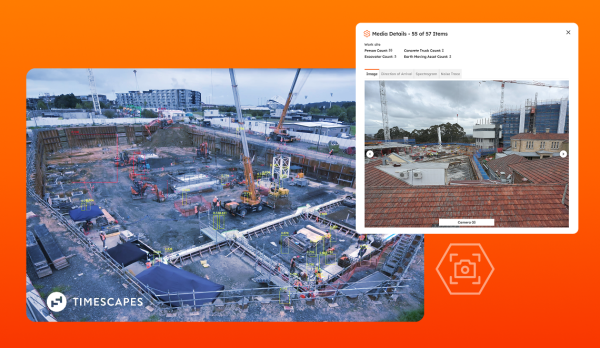
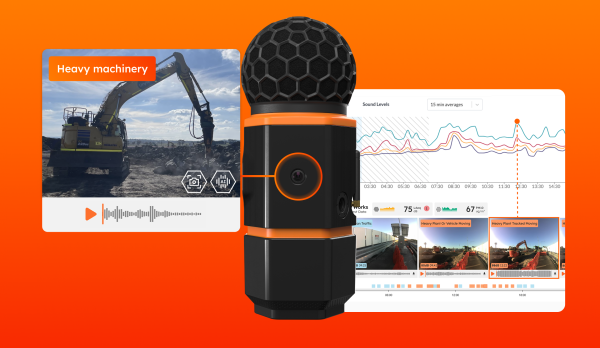
Modern environmental monitoring devices now provide not just the core data levels, but also valuable contextual information such as time-stamped and classified imagery, audio recordings and weather correlation. They also alert people to events automatically.
This is critical because numbers alone cannot distinguish, for example, between construction noise vs passing trucks, or site dust vs local wind events. With a monitoring network across the whole site, contractors can be alerted to exceedances faster and identify issues quickly.
For project and environmental managers, this dramatically improves decision-making speed. It enables targeted mitigation if required and avoids unnecessary shutdowns. Having this immediate insight means the project can be more productive.
Does using more monitoring devices increase project costs?
The short answer is no! Investing in more monitoring devices increases monitoring costs, but there are significant gains for the overall project.
Optimising monitoring is an operational and productivity tool that delivers both immediate productivity gains and longer term operational improvements. It’s also a significant mitigator of risk.
1. Immediate productivity gains
Greater monitoring visibility provides:
- Confidence to maintain operations
- Faster decision-making
- Reduced investigation time
- Fewer precautionary work stoppages.
Which means higher workforce productivity. On large ANZ infrastructure projects, even minor productivity improvements translate into significant cost savings.
2. Ongoing organisational capability and project delivery
Data from multiple devices allows contractors to:
- Analyse trends across the site and through the project stages
- Improve mitigation planning
- Benchmark environmental performance
- Strengthen compliance and ESG reporting.
Optimised monitoring improves organisational capability and project delivery.
3. Fewer complaints and disputes, and reduced risk
Comprehensive monitoring provides data to respond to queries and resolve complaints faster. From a cost and productivity perspective it can deliver significant gains including:
- Less time spent resolving complaints
- Easier to meet compliance and reporting requirements
- Reduced fines and community reparations
- Improved audit outcomes.
In high-profile projects, risk reduction alone often justifies expanded monitoring.
How many monitoring devices should you use on your construction project?
The ideal number of devices is not the minimum required by approval conditions. It is the number that provides:
- Full-site visibility
- Confidence under regulatory scrutiny
- Defensible complaint response
- Faster operational decision-making
- Protection of programme certainty and ability to meet deadlines and requirements.
When planning monitoring for your project, ask:
- Does our coverage reflect the size and layout of the site?
- Are we adequately monitoring near all sensitive receivers?
- Do we have enough devices to compare readings across the site?
- Can we confidently distinguish construction impacts from background conditions?
- Will this setup allow us to maintain productivity under scrutiny?
If the answer to any of these questions is uncertain, additional monitoring devices may not be a cost — they may be protection. For many ANZ construction projects, a distributed monitoring network aligned to risk is the solution.
Building better construction projects through better visibility
Construction monitoring in ANZ is using modern technology to gain productivity and reputational improvements. It is shifting towards:
- Distributed, dense monitoring networks
- Real-time cloud platforms
- Smart contextual evidence
- Integrated weather analysis
- Proactive environmental management.
Contractors who invest in optimised monitoring gain:
- Programme certainty
- Reduced regulatory risk
- Stronger community trust
- Improved ESG performance
- Higher productivity.
Environmental monitoring is no longer just about compliance. It is about visibility, control and competitive advantage. With more monitoring it’s a win win situation for everyone:
- Contractors gain certainty and productivity
- Work teams gain safety, better working conditions and time-savings
- Communities gain transparency and protection
- The environment benefits from proactive management.
The future of construction monitoring in ANZ is distributed, intelligent and outcome-focused.
Links
- SiteHive Hexanode monitoring devices
- SiteHive Enviro software
- SiteHive Enviro Pro software
- SiteHive pricing
FAQs
What you’ll find out:
- How to determine the right number of monitoring devices for your site
- The benefits of dense monitoring data networks
- Using monitoring to optimise project outcomes
- Construction monitoring trends
Discover SiteHive
See how you can use SiteHive devices and software to easily and accurately monitor and manage environmental impacts during construction and operations.