Discover how real-time monitoring can empower you to take a proactive approach to dust management.
When it comes to managing the environmental impact of a construction site, mine, quarry, port or industrial facility, using real-time monitoring technology is a game-changer. It can empower you to take a proactive approach to dust management, helping you avoid fines, stay on schedule, and safeguard the environment and nearby communities.
By continuously tracking dust levels, you can address issues before they happen and make confident, data-driven decisions. In this article, we’ll explore the most commonly used dust monitoring solutions (real-time and others) and share the best strategies for tackling air quality challenges with real-time monitoring.
What is real-time dust monitoring?
Real-time dust monitoring means continuously measuring airborne particulates, such as silica, carbon dust, and soot, to help industries manage environmental risks.
The main focus of real-time dust monitoring technology is to:
- Track daily averages, statistics and trends in dust levels
- Understand the causes of potential increases
- Take proactive steps to prevent or mitigate the impact before it becomes a problem.
Who needs real-time dust monitoring?
Real-time dust monitoring helps the following industries actively manage risks by providing continuous, up-to-the-minute data on dust levels:
1. Construction sites
Monitor dust exposure levels and air quality to protect workers and nearby residents and stay compliant with regulations. Construction sites include buildings (such as residential areas, hospitals and schools) and infrastructure projects (such as railways, roads and tunnels).
2. Ports and logistics
Track airborne particles in high-traffic areas to ensure compliance and reduce environmental impact.
3. Waste management facilities
Landfills and waste processing plants can be sources of significant dust. Real-time monitoring ensures that dust emissions are managed and air quality is controlled in these areas.
4. Mines and quarries
Mines and quarries produce dust that can harm both the environment and workers. Real-time monitoring in these sites helps track airborne dust and ensures compliance with environmental regulations.
5. Other industrial operations
Control possible silica and dust exposure and maintain safe working conditions with real-time monitoring.
Commonly used dust monitoring methods
Dust monitoring is essential for managing air quality and ensuring compliance with environmental regulations. Monitoring methods can be categorised into lab-based analysis and real-time monitoring.
Lab-based analysis methods
1. Deposition gauges
This method is commonly used to prove compliance with regulations. The dust deposition gauges usually collect dust samples over a defined period (usually 14 or 30 days). After the collection phase, the samples are sent for lab analysis to provide reporting on volume, mass, and type of dust deposited.
- Why they’re great: Low cost, easy to deploy.
- The downside: Results take weeks, so exceedances are identified retrospectively.
2. Gravimetric analysis
The most commonly referred to method of dust sampling in the Australian and US standards is gravimetric sampling. This is a filter-based method that involves sampling a known volume of ambient air through a filter. The filters are sent to a lab to be weighed before and after exposure to determine the mass of particles. The collected dust sample is expressed as mass (mg) of dust per cubic meter (m3) of air.
- Why they’re great: Accurate, detailed measurements.
- The downside: Results take weeks, so exceedances are identified retrospectively.
While lab-based solutions are a strong method for compliance, results take weeks to process, making proactive dust management impossible.
Real-time monitoring methods
Real-time technologies provide live insights on dust levels, enabling teams to prevent exceedances before they happen. There are a variety of techniques that each have different price points and accuracy. The following types of light-based sensors are most often used for real-time monitoring in construction.
1. Beta Attenuation Monitoring (BAM)
This is a widely used air monitoring technique that analyses the absorption of beta radiation by solid particles extracted from airflow.
- Why they’re great: Highly accurate and reliable for continuous dust monitoring.
- The downside: High cost and complex maintenance.
2. Photometers
This method measures the number of dust particles based on the amount of light they scatter at a specific angle. A similar technique is the nephelometer, which measures light reflected over as wide a range of angles as possible.
- Why they’re great: Provides immediate data for real-time monitoring.
- The downside: Expensive compared to some other methods and may have lower accuracy for fine particles.
3. Optical Particle Counters (OPCs)
OPCs measure the light scattered by individual particles carried in a sample air stream through a laser beam. These measurements are used to determine the particle size and particle number concentration. Particle mass loadings (PM1, PM2.5 and PM10) are then calculated from the particle size spectra and concentration data, assuming a particle density and refractive index (RI).
- Why they’re great: Real-time data enabling proactive monitoring, portable and easy to deploy, more affordable.
- The downside: Accuracy can be affected by environmental factors like humidity and temperature.
Choosing the right dust monitoring method for your site
For many projects, real-time monitoring technologies are enough for compliance and should be the preferred solution as they enable proactive management of dust.
But some projects specifically require lab-based analysis to show compliance. In this case, combining real-time monitoring with lab-based methods like dust deposition gauges helps teams to proactively manage dust levels and demonstrate regulatory compliance when needed.
Mastering real-time dust monitoring with SiteHive
SiteHive’s software and devices enable proactive dust management through real-time insights into your site’s activity. It gives you the data you need to prevent issues, protect workers and communities, and comply with industry standards. Through SiteHive Enviro Pro, you can also log lab-based results, such as dust deposition, to get a full picture of your site’s dust impact for management, analysis, reporting and trends comparison.
SiteHive Hexanode Multi: next-generation devices
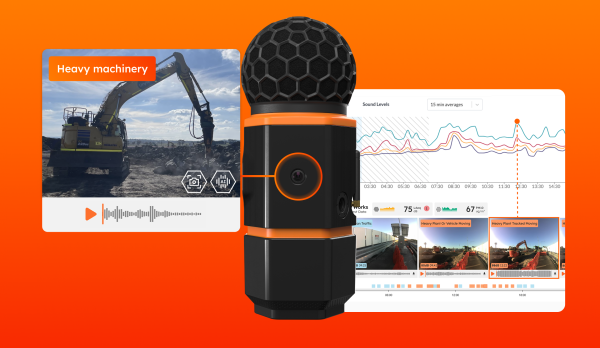
The SiteHive Hexanode Multi provides 24/7 monitoring for particulate matter, including PM2.5 and PM10. It captures real-time measurements along with rich contextual images, audio and direction of arrival to show you exactly what’s happening.
If your project requires managing multiple environmental aspects like noise, dust and vibration, the SiteHive Hexanode family of devices is made for you. The Hexanode Multi monitors both noise and dust while the Hexanode Vibration can be paired for tracking vibration. All Hexanode devices are compact, durable, and highly portable.
Our subscription model means you only pay for what you need, no concerns about repairs and device obsolescence. Plus, no matter how many devices you need, our rental model includes free access to our powerful software, SiteHive Enviro.
SiteHive Enviro and Enviro Pro: intuitive and user-friendly software
SiteHive’s software solutions, Enviro and Enviro Pro, provide all your environmental data in one central location. This includes dust, noise, vibration and water along with comparisons to nearby EPA monitoring stations and on-site weather data from the Bureau of Meteorology (BoM).
Our user-friendly dashboard simplifies data visualisation, showing you all your environmental data in a clear and simple form and enabling you to dive deeper into your site’s activity through interactive graphs. Our PDF reports and stakeholder view also enable you to show your site is compliant and build a trusting relationship with stakeholders and communities.
Cutting-edge features for enhanced monitoring
SiteHive’s software and devices come equipped with advanced features that give you a clear understanding of your site’s impacts.
- The Direction of Arrival (DoA) map shows exactly where dust is coming from and includes wind speed and direction.
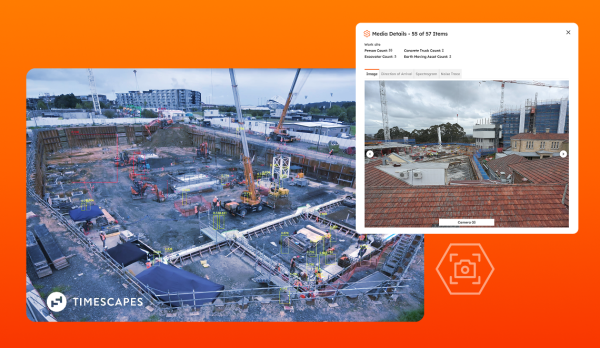
- The daily timeline, supported with image and audio capture, gives you an overview of operational activities throughout the day, helping you correlate dust events with specific site activities.
- The AI Audio Classifier saves you hours of time by automatically identifying what’s causing exceedances in real time.
- Rules and notifications enable you to receive real-time alerts every time a dust threshold is exceeded.
- Adding attended measurements (such as dust deposition) enables you to get a full overview of your dust data for management, analysis, reporting and trends comparison.
Our solution comes with many other great functionalities (like Events management, Attended measurements and Stakeholder view). Combined together, these advanced features provide everything you need to understand exactly what’s happening on your site, show you’re compliant and make quick and confident decisions to reduce dust levels.
Proactive dust management
Real-time dust monitoring with SiteHive helps you proactively identify increases in dust levels, determine their underlying causes, and take immediate action to mitigate or prevent their impact. SiteHive’s dust monitoring software and devices make this process seamless and efficient.
If you want to learn more about how SiteHive can enhance your site’s real-time dust management efforts, send us a message through our contact page or call +61 483 924 329.
Useful links:
- More details on SiteHive dust management products.
- Contact us if you’d like more information or a demo.
What you’ll find out:
- What is real-time dust monitoring and why use it
- Who needs real-time dust monitoring
- Commonly used dust monitoring methods and their pros & cons
- An overview of SiteHive’s real-time dust management solution
Want to try real-time dust management with SiteHive?
Send us a message through our contact page to get a personalised quote based on your site’s needs.