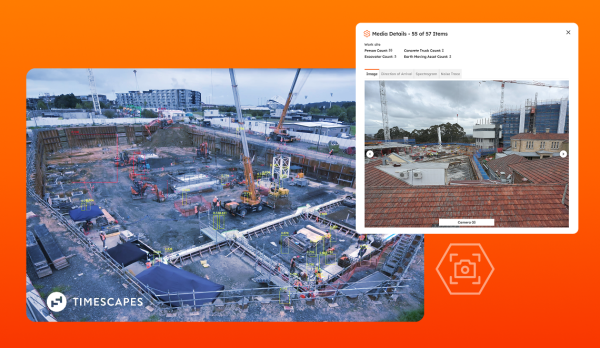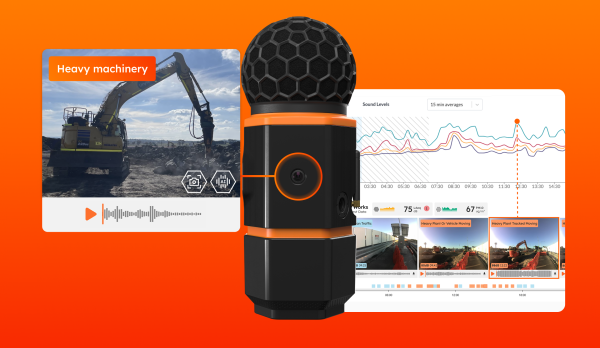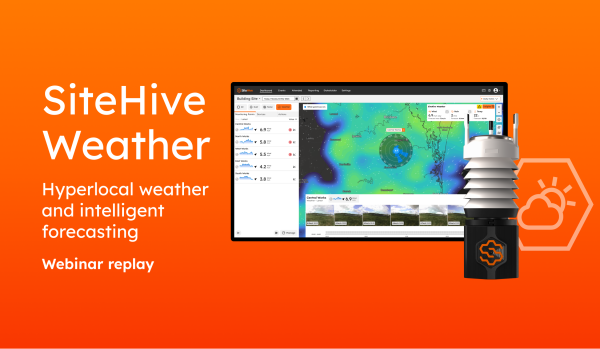
The SiteHive Enviro Stakeholder view provides stakeholders and communities with real-time information on dust and noise levels, 24/7.
During major construction projects, a lot of different stakeholders are interested in what’s going on – and each group has their own interests and concerns. In this article we look at how innovative technology can be used to keep stakeholders informed, and thereby foster better relationships between communities, contractors, governments and more.
Infrastructure and other major construction projects can have an impact on the surrounding environment. They almost inevitably create noise, dust, vibration, and potentially other issues that can impact teams, communities and the local environment. It’s generally the job of environmental managers to minimise and manage the process, but there are many different stakeholders that are interested in what’s happening – from a personal, regulatory, financial, environmental or other perspectives.
Who are a project’s stakeholders, and what are their main interests?
The stakeholders on construction and operational work can be many and varied, each with their own questions, issues and interests. Any major work will typically include several, if not all, of the following stakeholder groups:
1. Project owners/clients
These are the individuals or organisations financing and commissioning the project, and they generally want to know about operational progress and impact, timeframes, costs, social impact, environmental impact and more.
2. Regulatory authorities
Government agencies and other regulatory bodies that define and/or oversee standards, permits, and compliance with safety and environmental regulations. These groups want to know that the work is being conducted in line with the relevant standards and legislation.
3. Government
Depending on the size of the project and work, Local, State and Federal Governments may be involved in setting project requirements, legislated issues, and community, social and environmental impact. Governments want to be sure that operations continue in line with their requirements and expectations, and how the work is affecting communities and the environment.
4. Work teams, subcontractors, unions
These are the individuals, and their representative organisations, who are doing the work. They can be the closest to any noise, dust, or issues created by works, and need to know they are not subject to anything dangerous or unhealthy.
5. Community residents
These are the people living near the construction or operational site who may be affected by noise, dust, vibration, traffic and other disruptions. They typically want to know what’s happening and when, what to expect, and if the work is being completed within the appropriate guidelines. They want minimum disruption, minimum noise, minimum dust.
6. Local business owners
Local businesses generally have the same issues as residents, but with the added issue of things that may affect their business income and trading operations – such as customer access or changed traffic patterns.
7. Environmental groups
Any given area might have a number of organisations and/or individuals who are concerned about the environmental impact of the operations and advocating for sustainable practices. The issues can range from protecting specific species, to green space impact, sustainability and more. These groups want to understand the impact of works and how they affect each specific concern.
The stakeholders above are by no means exhaustive. Operations and projects have many other stakeholders too such as investors and financial institutions who provide funding; utility companies who need to provide supply of water, electricity, gas, and telecommunications; and the media: the news outlets (local or national) that report on the project’s progress and impact. But the ones above are perhaps not only the most immediately affected, but also the ones who need to be kept informed.
Why we need to engage stakeholders
Engaging stakeholders effectively is key to ensuring a successful project outcome and minimising conflicts. During construction or major operational work, good stakeholder engagement is crucial for several reasons:
1. Transparency
Open communication builds trust among stakeholders such as the community, investors, and regulatory bodies. It helps mitigate concerns and fosters a sense of inclusion.
2. Managing expectations
Regular updates help stakeholders understand project timelines, potential delays, and changes in scope. This prevents misunderstandings and aligns expectations.
3. Risk management
Informing stakeholders about potential risks and challenges allows for collaborative problem-solving. It enables proactive measures to minimize negative impacts.
4. Compliance and regulation
Many construction projects are subject to legal and regulatory requirements. Keeping stakeholders informed helps ensure compliance and facilitates necessary approvals.
5. Safety
Keeping the community informed about construction activities can enhance safety awareness. This is particularly important if the project affects traffic patterns or public access.
6. Feedback and input
Engaging stakeholders allows for feedback that can improve project outcomes. Their insights can lead to adjustments that enhance community acceptance and project effectiveness.
7. Conflict resolution
Early communication can help identify and address issues before they escalate into conflicts, reducing the likelihood of disputes and delays.
Overall, proactive communication fosters a collaborative environment that can lead to smoother project execution and a more positive perception of the construction efforts.
How to keep stakeholders informed
Technology can play a major role in keeping stakeholders informed, engaged and satisfied during major works. SiteHive Enviro Pro, the award-winning environmental management software, includes a StakeHolder View that allows people who are not directly involved with the project to see key elements of what’s happening in real time.
Environmental managers are able to keep everyone informed and build trust by sharing live data – for example on dust, noise and vibration levels. Stakeholders are able to see what’s happening at any time, simply by going online.
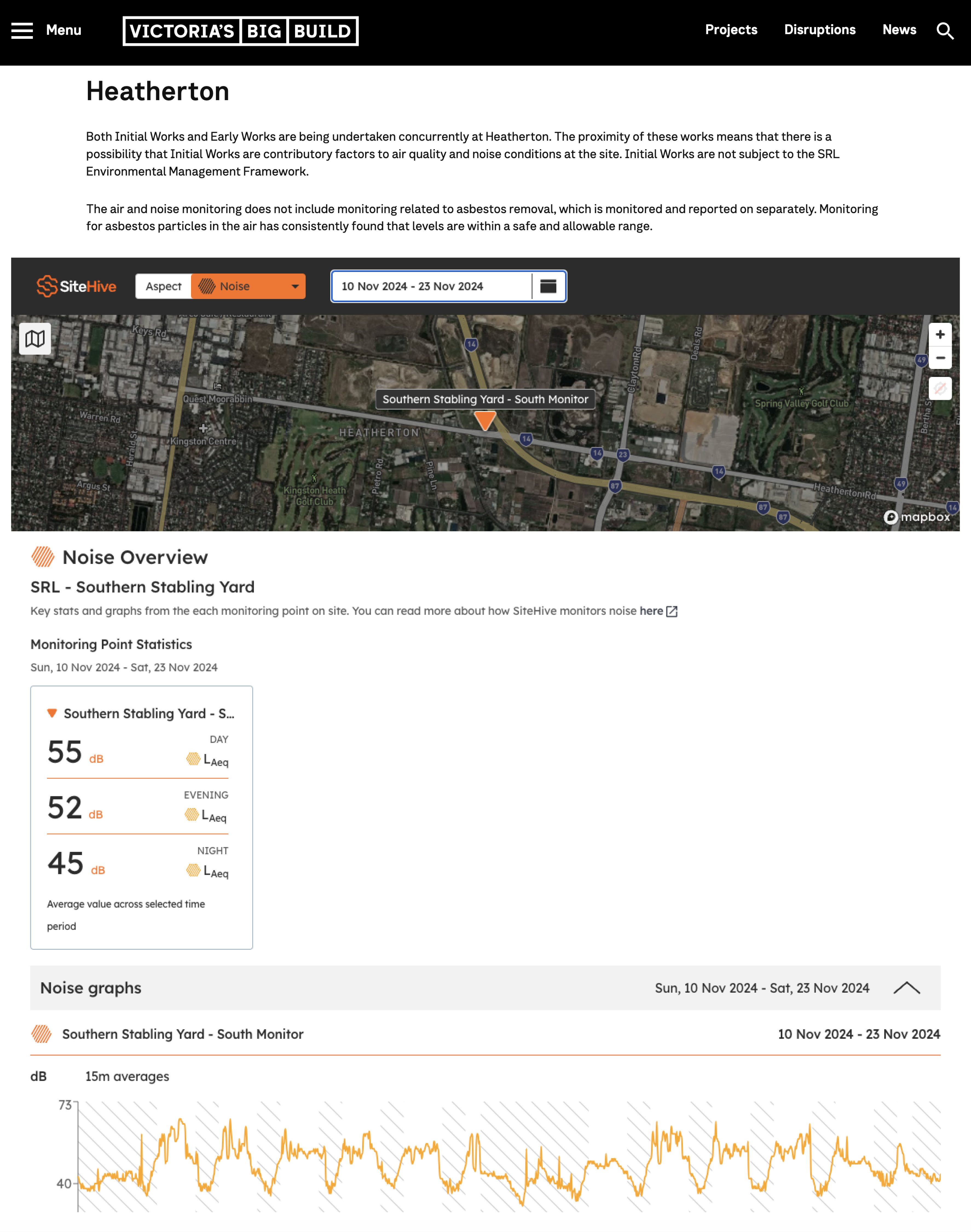
The Victorian Government, for example, has been running a 12-month trial using this feature in SiteHive Enviro Pro to publish live graphs of noise and air quality levels during work on the Suburban Rail Loop in Melbourne’s East. Anyone can go to the Victoria’s Big Build website and see the status of the air quality and noise levels at any time. This transparency allows the government, and the contractors, to build trust with residents and local businesses.
Here’s an example of the noise data available to stakeholders on this project:
The Stakeholder View allows environmental managers to choose which data they want to share, so that it’s simple and easy to understand for people. They can also choose who is given access – the Stakeholder View can be useful for many different stakeholders including residents, local business owners, regulators, clients, government and council bodies, subcontractors, work teams and more.
With the local community, for example, it’s a great way to build trust. For subcontractors it can make it easy for them to understand what’s happening on site in real time – and take action if required. For government bodies and councils it gives them confidence that work is being carried out appropriately.
Overall, the Stakeholder View in SiteHive Enviro Pro provides an easy and effective way to keep teams, contractors, clients, communities and other stakeholders informed. It allows contractors to build trust and better relationships, as well as mitigate complaints.
What’s more? The Stakeholder view also supports you in getting the ISC As-Built Env-2 Noise, Env-3 Vibration and Env-4 Air Quality credits, which require gathering and applying stakeholder feedback (Level 2) and sharing public reporting (Level 3). We’ll publish blog articles on how you can achieve those credits with SiteHive soon. Register for The Buzz, our monthly newsletter, to stay in the loop!
Useful links:
- More details on SiteHive Enviro Pro.
- Contact us if you’d like more information or a demo.
What you’ll find out:
- Who are a project’s stakeholders, and what are their main interests?
- Why it is important to keep stakeholders informed
- How to share information with stakeholders easily and effectively
- An example of how one organisation is sharing live information
See all the great things you can do
SiteHive Enviro Pro comes with many other great features, including an AI Audio Classifier, event management and advanced reporting.