Learn how to effectively monitor dust on construction sites for worker safety and compliance. Uncover key methods and tools for dust control and measurement.
Dust is a common byproduct of construction activities, so monitoring and controlling it is crucial for the health and safety of workers and the surrounding community. Effective dust monitoring involves measuring dust levels accurately, using the right tools, and adhering to local standards to ensure a healthier environment.
How do you measure dust on a construction site?
Measuring dust on a construction site involves collecting data on airborne particles to ensure they remain within safe limits. The most common approach is to use dust monitors that measure particle concentration in the air. These devices identify dust levels, track changes over time, and provide continuous measurements, allowing for proactive management of dust emissions. Implementing comprehensive dust monitoring programs ensures that dust levels are consistently tracked and managed, providing a systematic approach to maintaining air quality on construction sites.
Dust sampling techniques and methods
There are two principal techniques for sampling dust which are referred to as active and passive methods.
- Active sampling – Uses devices with a fan (or pump) to draw air through an optical sensor, providing real-time measurements of airborne particles.
- Passive sampling – Collects dust deposits in a container or on a sticky surface using natural air movement for further analysis by a laboratory to determine make up of airborne particles.
A subset of active sampling is gravimetric sampling. This technique involves real-time sensor technology using a pump to draw a known volume of air through a pre-weighed filter. The filter captures dust particles, which is then weighed to determine the amount of dust collected. The difference in weight before and after sampling indicates the dust concentration in the air.
Both active and passive methods are essential for managing dust levels and ensuring accurate measurements. Active sampling helps sites manage their dust impacts in real time, preventing issues before they occur, whereas passive sampling gives sites confidence in exactly what has been emitted.
In addition to these methods, personal dust sampling is crucial for accurately assessing an individual’s exposure to airborne dust, ensuring worker safety.
Real-time sensor technology
Real-time sensor technology efficiently monitors dust levels and assesses air quality. These sensors use light scattering or laser diffraction methods to measure the concentration of airborne particles. They provide instant feedback, allowing site managers to take immediate action if dust levels exceed safe thresholds. Real-time monitors are particularly useful for identifying trends, preventing issues before they occur, and addressing community concerns about potential health risks.
What are the best dust measuring tools for a construction site?
Several tools could be used to measure dust levels on a construction site, the most proactive of which is a real-time dust monitor.
Other tools, such as gravimetric samplers, dust deposition gauges, and personal dust monitors, can complement real-time monitoring to ensure comprehensive dust measurements across the site. Collectively, these methods cover all aspects of dust monitoring, helping to maintain a safe and healthy environment for workers and nearby communities.
In addition to these tools, implementing effective dust control measures is essential to mitigate dust emissions and protect worker health.
Australian standards for dust levels
The National Environment Protection (Ambient Air Quality) Measure (NEPM) aims to achieve National Environment Protection Standards as assessed in accordance with a (set) monitoring protocol. The desired outcome of the NEPM is ambient air quality that allows for the adequate protection of human health and well-being.
Each state also typically has its own approved sampling methods, which overlap with the NEPM. For example, the NSW EPA approved methods for the sampling and analysis of air pollutants and the Queensland Government Environment Department summary of methods for sampling particulates.
The Australian Standards are then very specific to each method, e.g. gravimetric sampling, and have not yet kept up with newer technology such as optical particle counters.
What are the dangers of high dust levels on a construction site?
Limited exposure to construction dust is generally harmless, but frequent inhalation of harmful dust can significantly harm workers’ health. These risks vary based on the type of dust, exposure duration, particle size, and where these particles settle in the respiratory system.
Different types of construction dust can have varied effects on health. For instance, fine particulate matter can penetrate deep into the lungs, while larger particles may settle in the upper respiratory tract.
This is why proper dust control and air monitoring are essential to protect workers’ health.
Impacted communities and stakeholders near construction sites generally prefer no dust impacts, so it is important to manage dust on site proactively to prevent community impacts.
How can you evaluate workers’ dust exposure?
Evaluating workers’ exposure to dust involves both personal and area monitoring. Personal dust monitors are worn by workers to measure the amount of dust they are exposed to during their shifts. These devices provide real-time data and can alert workers and supervisors if dust levels become hazardous. Area monitoring, on the other hand, involves placing stationary monitors around the site to assess the general dust levels in different locations. Together, these methods ensure that workers are not exposed to dangerous levels of dust, safeguarding their health and that of nearby communities.
Developing a comprehensive dust control strategy is essential to ensure that both personal and area monitoring are effectively integrated to protect workers.
Dust abatement techniques
There are many techniques you can use to reduce airborne dust across your site. Water sprays and misting systems are commonly used to suppress dust at its source, keeping dust particles wet and preventing them from becoming airborne. Enclosing or covering dusty areas, using dust barriers, and applying dust suppressants can also help minimise dust emissions. Additionally, regular cleaning and maintenance of the site can reduce the accumulation of dust, promoting a healthier environment.
Alongside the right monitoring tools, these techniques are a great way to control dust levels across your construction site, protect your workers’ health and comply with regulatory standards. Continuous monitoring and a well-planned dust control strategy are key to creating a safer and more sustainable working environment.
Our solution: the SiteHive Dust Monitoring Service
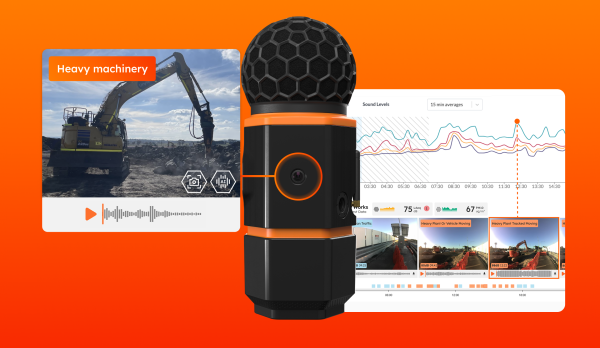
To support these efforts, SiteHive offers a state-of-the-art dust monitoring service. Using our system, you’ll receive real-time data across your entire site, enabling swift, data-driven decisions. Our cutting-edge monitors, such as SiteHive Hexanode Multi, track respirable dust and particulate matter, providing thorough air quality assessments in real time. The ability to access real-time data online 24/7 ensures you’re immediately aware of any risks.
SiteHive’s monitoring devices offer continuous dust monitoring, helping you stay ahead of compliance requirements. Our solutions give you insights into ambient conditions and directional dust trends, ensuring up-to-date information on air quality. This comprehensive approach makes it easier to protect your workforce and the surrounding environment from harmful exposure.
Incorporating SiteHive’s monitoring service into your dust control strategy ensures a comprehensive approach to managing dust emissions and protecting worker health.
References
- National Environment Protection (Ambient Air Quality) Measure: https://www.nepc.gov.au/nepms/ambient-air-quality
Standards referenced by the NEPM:
Particles as PM10
- Determination of Suspended Particulate Matter-PM10 High Volume Sampler with Size Selective Inlet-Gravimetric Method AS/NZS 3580.9.6:2003
- Determination of Suspended Particulate Matter- Dichotomous sampler (PM10, coarse PM and PM2.5) – Gravimetric method AS/NZS 3580.9.7:2009
- Determination of Suspended Particulate Matter-PM10 continuous direct mass method using tapered element oscillating microbalance analyser. AS/NZS 3580.9.8-2008
- Determination of Suspended Particulate Matter-PM10 Low Volume Sampler-Gravimetric Method AS/NZS 3580.9.9:2006
- Determination of Suspended Particulate Matter-PM10 beta attenuation monitors AS/NZS 3580.9.11:2008/Amdt 1 :2009
Particles as PM2.5
- Determination of Suspended Particulate Matter-PM2.5 low volume sampler-Gravimetric Method AS/NZS 3580.9.10:2008
- Determination of Suspended Particulate Matter-PM2.5 beta attenuation monitors AS/NZS 3580.9.12:2013
- Determination of Suspended Particulate Matter-PM2.5 continuous direct mass method using a tapered element oscillating microbalance monitor AS/NZS 3580.9.13:2013
- Determination of Suspended Particulate Matter-PM2.5 high volume sampler with size-selective inlet – Gravimetric Method AS/NZS 3580.9.14:2013
What you’ll find out:
- Importance of dust monitoring
- Health risks of dust exposure
- Effective measurement strategies
- Technologies for managing dust levels
Want to monitor dust with SiteHive?
SiteHive software and devices make it easy to see and manage what’s causing dust in real time.