Discover all you need to know about the current Australian standards for monitoring human comfort impacts caused by vibration.
Australia has very strict standards and regulations for the construction industry—noise management, waste disposal, water pollution, and a whole host of other standards. One area people may overlook is vibration exposure and its effect on nearby communities. Australia has a dedicated standard regarding the impact of vibration on human comfort.
What is the official Australian standard for monitoring human comfort impacts caused by vibration?
The official Australian standard for monitoring human comfort levels caused by vibration is the AS 2670.2, or the AS 2670.2: Evaluation of human exposure to whole-body vibration. This standard is directly related to the British Standard BS 6472–1984, a precursor to ISO 2631.2–1989, published in Australia as AS 2670.2–1990.
The standard provides comprehensive guidelines for assessing human exposure to whole-body vibration. It defines the acceptable levels of continuous and shock-induced vibrations in the 1 to 80 Hz frequency range. Developed by the Standards Australia Committee on Vibration and Shock—Human Effects, it focuses on protecting the comfort and well-being of building occupants.
The guideline outlines preferred and maximum values for vibrations, taking into account the time of day and the specific use of the building, whether residential, commercial, or sensitive areas like hospitals.
The standard requires accurate measurement and evaluation techniques to keep human exposure within safe limits, mitigating discomfort and potential health impacts.
The NSW Environmental Protection Authority (EPA) also has a technical guideline based on an updated version of the British Standard BS 6472-1992, Evaluation of human exposure to vibration in buildings (1-80 Hz). Assessing vibration: a technical guideline does not address motion sickness, occupational vibration, blasting vibration effects, or vibration-induced damage to buildings or structures.
The primary method of measuring human comfort impacts caused by vibration is the Vibration Dose Value, derived from acceleration measurements.
How vibration exposure affects people
When occupants can detect vibration in buildings, this could impact their quality of life or working efficiency. In contrast, people tolerate much higher vibration values in vehicles than in buildings. Individuals can detect building vibration values that are well below those that can cause any risk of damage to the building or its contents.
Some vibration sources give rise to audible effects such as structure-borne noise and secondary rattling of building elements or contents. The vibration level affecting amenities is lower than that associated with building damage.
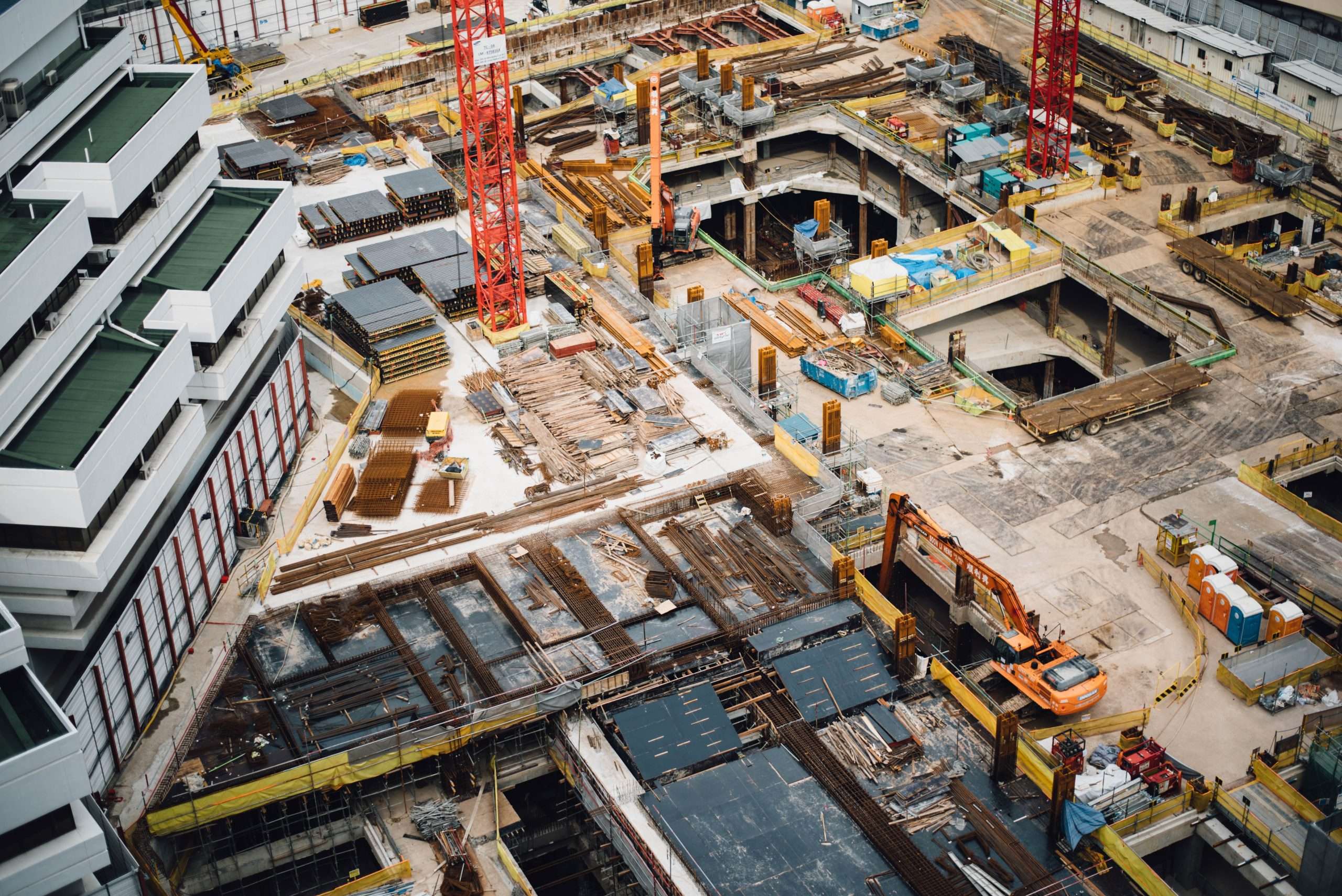
SiteHive covers sources of vibration such as construction and excavation equipment, rail and road traffic, and industrial machinery.
Many external sources, including industrial, construction, and transportation activities, can cause vibration in buildings. The vibration may be continuous (with magnitudes varying or remaining constant with time), impulsive (such as in shocks), or intermittent (with the magnitude of each event being either constant or varying with time).
How vibration is assessed & measured
Vibration and its associated effects are usually classified as continuous, impulsive or intermittent:
- Continuous vibration continues uninterrupted for a defined period (usually throughout daytime and/or night-time). This type of vibration is assessed based on weighted rms acceleration values.
- Impulsive vibration is a rapid buildup to a peak followed by a damped decay that may or may not involve several cycles of vibration (depending on frequency and damping). Impulsive vibration (no more than three occurrences in an assessment period) is assessed using acceleration values.
- Intermittent vibration can be defined as interrupted periods of continuous (e.g. a drill), repeated periods of impulsive vibration (e.g. a pile driver), or continuous vibration that varies significantly in magnitude. It may originate from impulse sources (e.g. pile drivers and forging presses), repetitive sources (e.g. pavement breakers), or sources that operate intermittently but which would produce continuous vibration if operated continuously (for example, intermittent machinery, railway trains and traffic passing by). This type of vibration is assessed based on Vibration Dose Values (VDV).
The best way to measure and manage vibration impacts
Implementing the AS 2670.2 standard and the EPA Assessing Vibration: A Technical Guideline involves a systematic approach to measuring, evaluating, and mitigating vibration exposure.
- Conduct a comprehensive assessment of the vibration environment using accurate measurement instruments like accelerometers to capture data on vibration levels across the x, y, and z axes.
- Measuring vibrations at specific measurement points where they impact people, typically inside buildings is crucial.
- Once data is collected, it should be compared against the preferred and maximum values outlined in the standard to determine compliance.
- If the levels exceed the recommended thresholds, mitigation measures must be applied. These include using vibration isolation techniques, modifying operational procedures, or selecting less vibration-intensive equipment.
- Ongoing monitoring and community engagement are vital, especially when working near sensitive areas or residential zones.
By adhering to the AS 2670.2 guidelines and the EPA Assessing Vibration: A Technical Guideline, organisations can effectively manage vibration impacts, ensuring a comfortable and safe environment for all occupants.
The best way to measure human comfort impacts caused by vibration
The best way to comply with vibration monitoring standards and ensure vibration comfort is to use dedicated devices capable of tracking vibration levels across construction sites.
Technical guidelines from the Department of Environment and Conservation assess these impacts, including effects on human comfort and structural integrity.
SiteHive’s advanced software and devices offer a comprehensive solution for monitoring and managing vibrations that are in line with these standards.
Monitoring and analysis with SiteHive
SiteHive makes vibration monitoring easy and accurate. Our robust, palm-sized devices automatically capture vibration data, including structural and human comfort vibrations and ground-borne noise.
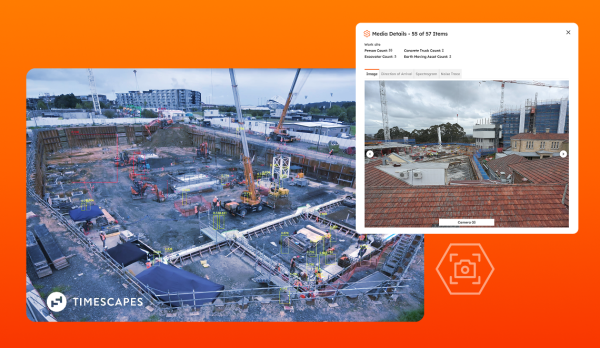
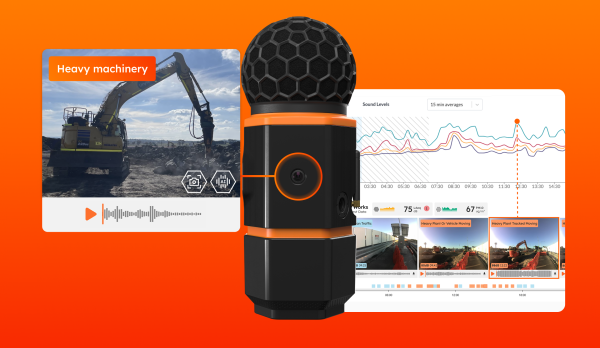
It provides continuous real-time data and detailed contextual waveforms of events. When used alongside other SiteHive Hexanode devices, you can also capture images and audio, giving a complete picture of site activities.
This valuable data is seamlessly integrated into the SiteHive Enviro software, where it all comes to life. By evaluating vibration parameters, this software delivers real-time insights into your site’s vibration sources.
This system quickly identifies vibration events, streamlines your reporting processes, and ensures adherence to regulatory standards.
Our platform keeps stakeholders informed with features such as:
- Vibration Trends Monitoring: The software instantly calculates summary statistics for peak velocities and Vibration Dose Values (VDVs), providing a detailed view of vibration patterns over time. It also evaluates whole-body vibration, crucial for workplace health and safety, by measuring exposure and mitigating risks associated with machinery use.
- Frequency Impact Analyses: SiteHive’s tools graph and analyse frequency-based impacts, identifying potential project risks associated with specific vibration frequencies.
- Ground-Borne Noise Calculations: The software automatically measures noise levels caused by vibrations through structures, ensuring accurate monitoring and management of ground-borne noise.
Efficient reporting and data sharing
SiteHive vibration monitoring and reporting solutions streamline the whole process, enabling users to quickly generate detailed PDF reports with site-specific configurations saved for repeated use.
This feature simplifies documentation, ensuring all necessary data is readily available for audits or stakeholder communication.
- Quick and Easy Reporting: Instantly generate detailed, site-specific PDF reports with all relevant data clearly organised.
- Statistics and Analysis: Efficiently compute key statistics, such as VDVs, to analyse trends over time and identify workplace risks.
- Data Sharing with Stakeholders: Configure and provide access to a curated view of your site’s data, giving stakeholders real-time information.
Versatile and user-friendly devices
SiteHive Hexanode devices are adaptable and installable in any orientation, ideal for dynamic construction environments. Their compact size and ease of installation enable flexible placement in various locations.
The devices also assess continuous, transient, and intermittent vibration events, providing a cumulative measure known as the Vibration Dose Value (VDV).
Using SiteHive’s innovative solutions effectively enables construction sites to meet Australian vibration control standards.
This approach enhances operational efficiency, ensures comprehensive environmental management, and facilitates clear communication with stakeholders, contributing to the project’s overall success and sustainability.
References
- Standards Australia. (1990). AS 2670.2-1990: Evaluation of human exposure to whole-body vibration – Continuous and shock-induced vibration in buildings (1 to 80 Hz). Sydney: Standards Australia. Retrieved from https://www.standards.org.au/standards-catalogue/standard-details?designation=as-2670-2-1990
- Standards Australia. (2001). AS 2670.1-2001: Evaluation of human exposure to whole-body vibration – General requirements. Sydney: Standards Australia. Retrieved from https://www.standards.org.au/standards-catalogue/standard-details?designation=as-2670-1-2001-rec-2016
- Environmental Protection Authority NSW. (2006). Assessing vibration: a technical guideline. Sydney: Department of Environment and Conservation. Retrieved from https://www.epa.nsw.gov.au/Your-environment/Noise/industrial-noise/assessing-vibration
What you’ll find out:
- Overview of Australian standards for human comfort
- Assessment methodologies
- Importance of vibration mitigation for safety
- Tools and methods for effective measurement
Want to monitor vibration with SiteHive?
SiteHive software and devices make it easy to see and manage what’s causing vibration in real time.